
MEETING VONNEGUT’S GHOST
A Christmas Train Ride Into NYC During an Ebola Outbreak

Ten years ago, despite the mayor declaring New York City Ebola free, the ghost of the virus still lingered as I took the 8pm train to Grand Central on Christmas. You couldn’t escape the word Ebola. Ebola was in airports, bowling alleys, and in next year’s omnibus bill. Anyone exhibiting sudden shivers, vomiting, or fatigue either had a winter bug or Ebola. You knew you might be in trouble if your lymph nodes ballooned to the size of grapefruits.
It was a little sad to see Ebola go because I thought it would’ve been romantic to risk getting Ebola to visit my girlfriend, Nancy. She had to waitress a Christmas party on 44th in Hell’s Kitchen—and even if the money was good, Ebola would’ve been a nice excuse to call out. Sure, you could contract the virus and die a miserable death, but it also seemed like if you were lucky enough to survive Ebola, the mayor might give you a key to the city.
By the time we rolled into the tunnel at Grand Central, an older lady walked down the aisle toward me. She stood behind me, holding the back of my seat to balance herself as the train shook. Out of the corner of my eye, I could see her red leather gloves. I could also feel her staring at the book I’d brought with me—Saul Bellow’s Herzog.
The train slowed down, and the person next to me jumped up to make their way for the exit. The lady with the red gloves took a seat beside me.
She leaned over and said, “I knew Bellow.”
Everyone in Manhattan knows everyone, I thought. Typically, crazy people had a habit of finding me in the city, so I had good reason to believe this could be another well-dressed city-dwelling schizophrenic. Regardless, I chose to believe her, because I wanted this to be true. It was Christmas after all.
She asked me if I’d read any other books by Bellow, and I told her that Herzog was the first. It was probably an abnormal novel to see on the train in 2014. If she really did know Bellow, who’d been dead about a decade by that point, I decided to tell her that the sentences in the book were aggressively good.
“Have you read Vonnegut?” she asked.
“Of course,” I said and rattled off my favorite novels and essays.
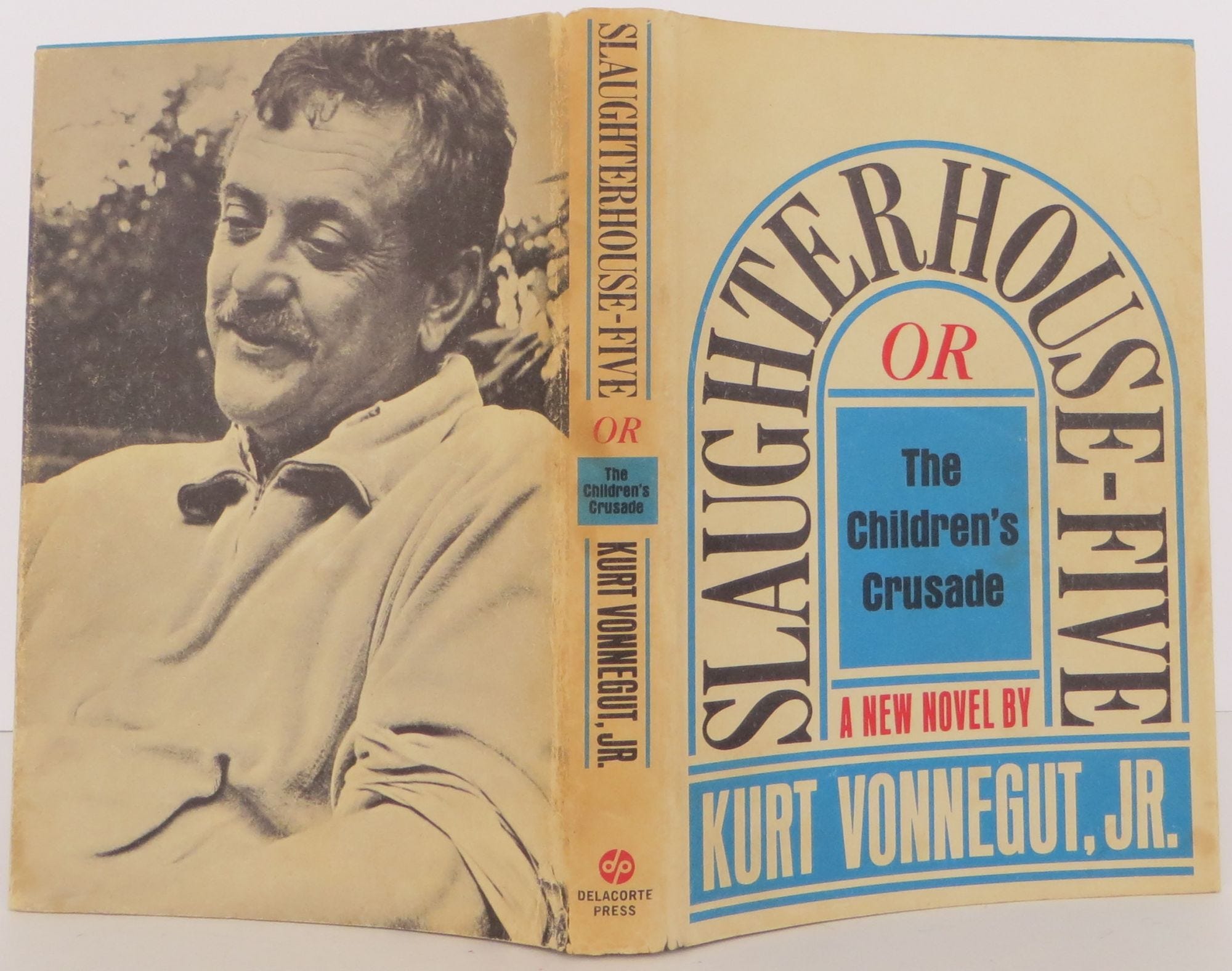
I didn’t feel the need to tell this stranger how the only things hanging on the wall of my bedroom were Vonnegut quotes. It seemed like a particularly odd image to summon of oneself in the mind of a stranger on a train. Why not a mirror? Why not a painting or a photograph? I’d put the quotes on the wall to focus on publishing while not letting the process of rejection crush me. Vonnegut could be deadly serious and equally lighthearted and inventive about the rotten and beautiful world of writing and its consequences for the soul.
The train stopped, and the two of us stood up to exit.
She asked me if I went to school. I had just graduated from a writing program where I studied fiction—which was basically admitting that I’m in debt and working part-time jobs and that my face and the holes in the elbows of my winter jacket were synonyms for living just below the poverty line. She asked what I did for work, and I told her I moved furniture for an auction gallery.
We walked together into the bright main concourse, and she extended her gloved hand to shake mine. I thought she was going to say goodbye, but then she looked around as though she was about to share some great secret and whispered, “I’m Kurt Vonnegut’s widow.”
I chose to suspend my disbelief as she studied my face to see if I would accept this information. My Groucho-Marx-looking eyebrows made it impossible to hide my surprise. It seemed too absurdly specific to be a lie. I’d stared at Vonnegut’s words on my wall every day for the entire year as some sort of North Star out of the wreckage of my existential post-grad aimlessness.
“Let me show you something,” the lady said, and I followed her toward the concourse clock. She pointed to the big lights suspended above the departing times and terminals.
“Do you know who designed those?” she asked. I did not.
“Faberge,” she said. It seemed accurate enough, they did look like giant eggs. We’d sold a bunch of small Faberge eggs at the auction gallery. I found them disturbing, but I think that’s because my parents used to bring me to see a giant talking egg named Eggbert. Eggbert looked like a severed head sitting on a throne. Eggbert wore a crown and had a painted face, and Faberge eggs looked like his offspring or something he’d eat or both. (Someone eventually burned down the barn where Eggbert used to reside. He’s back now unfortunately…)

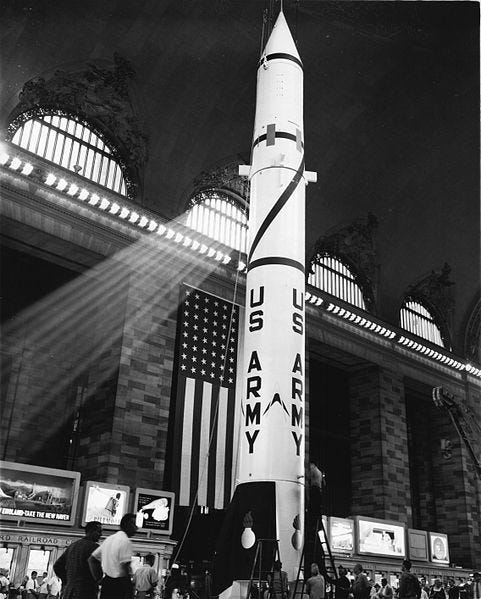
I felt compelled to share something I knew about Grand Central with Vonnegut’s widow. I pointed to the Gemini constellation over the terminal clock and told her how during the Cold War, the city raised a tall rocket in the middle of the concourse. How it didn’t fit when they tried to stand it up. So they cut a hole out of the ceiling to make it work. (It wouldn’t be until today, as I finished writing this story, that I’d learn this rocket miscalculation was, in fact, a myth. Supposedly, the rocket fit in the terminal just fine, and the hole was there to support a stabilizing wire. So it goes…)
The widow gave me her name, Jill Krementz, and her email before we went our separate ways.
I Googled her, and sure enough, she wasn’t lying. She’d made her name as a photojournalist in the Vietnam War, and she’d go on to take some of the most iconic photos of authors such as E.B. White, Tennessee Williams, Joan Didion, and, of course, Vonnegut.
I love God’s sense of humor. When I was able to zoom out of the experience, I remembered that I’d just met Lee Stringer at my MFA program who wrote the book “Like Shaking Hands with God” with Kurt Vonnegut. Before he found a career as a writer, he happened to be homeless and living in a crawlspace in the lower level of Grand Central—probably not very far from where Jill and I met.
Eventually, I found some shelter at the restaurant where Nancy was waitressing. A DJ and a woman playing saxophone competed for who could make the most annoying modern versions of Christmas classics. Nancy brought me a glass of bourbon to warm up, and I told her about Jill.
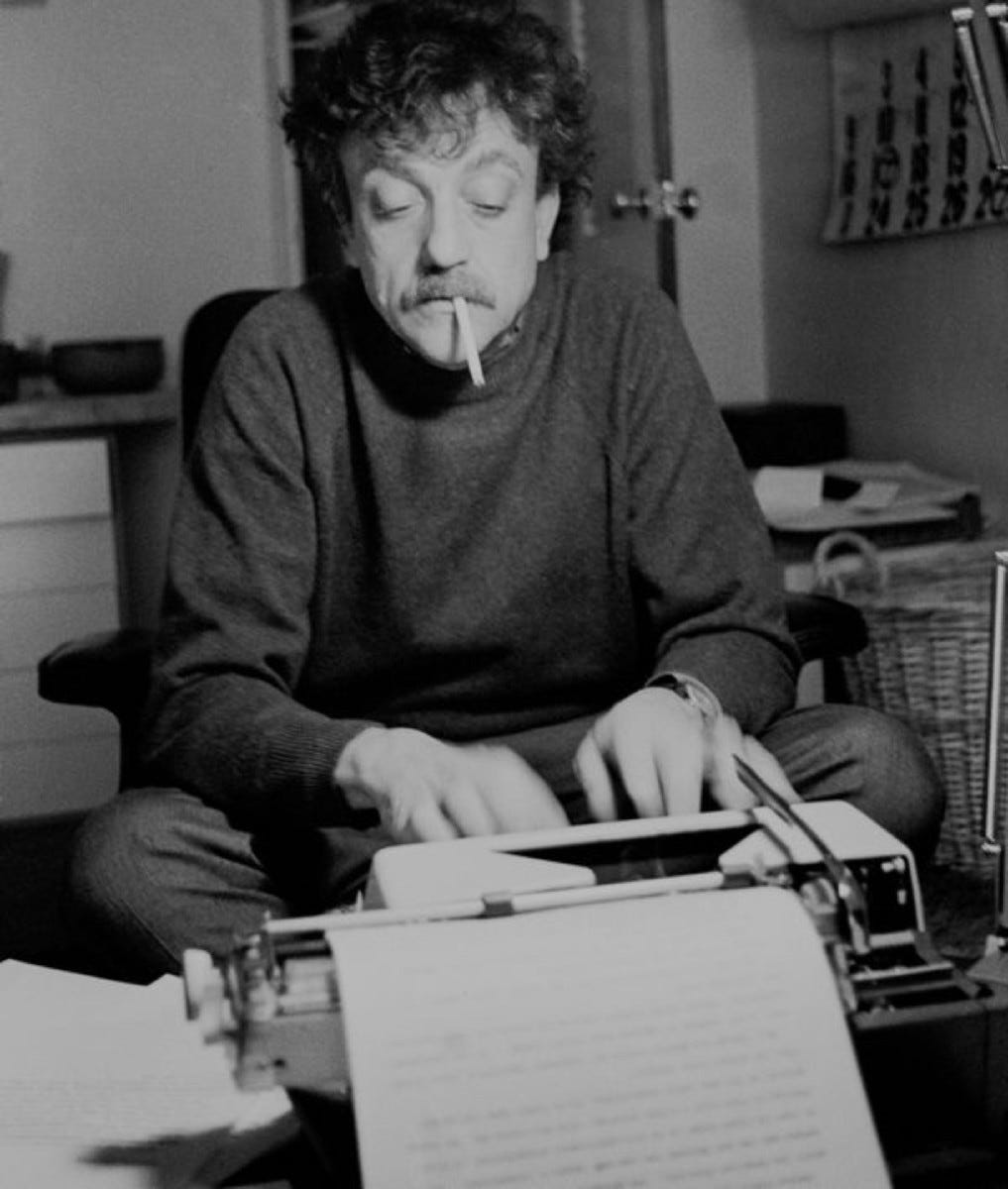
I wouldn’t know it yet, but a few days later, Jill would invite Nancy and me over to her house where I would sit at Kurt’s old desk with his old typewriter. The typewriter is the great imagination translation machine. It had all the fingerprints of Vonnegut’s memory. An empty ashtray on the desk waited for another one of his lit cigarettes. The ghost of all the writers you love linger in the words they leave behind—and Vonnegut’s ghost was heavy at his typewriter.
Jill would tell me that some of the quotes that I had on my wall were typed out on that typewriter. She’d show us all of the original prints of the photographs she’d taken of authors Nancy and I both admired. We walked past a framed photo on the wall that she took of Saul Bellow, tapped it with her finger, and said, “Here’s your friend, Bellow.”
“God wanted us to have enough storytellers,” Vonnegut once said while discussing the state of TV replacing the novel. It’s been about thirty years since he made that comment and now writers had to compete with many more technological advancements—for themselves and their audience—but these things should drive you to work harder rather than quit. I saw many quit. Some quit because they couldn’t arrange the words on their blank pages the way they saw them in their imaginations. Others quit because the constant rejection from editors and agents was too painful. And I understood all of that. For me, however, the greatest fear was the fear of finishing nothing, sharing nothing, and letting all of the ideas rot unused in my skull.
Anyway, before I got to sit in Vonnegut’s chair, I was waiting for Nancy’s shift to end, exchanging glances at one another while observing the debauchery of a corporate Christmas party unfold. I thought about propping the door open and trying to invite Ebola in myself. This part of NYC was called Hell’s Kitchen for a reason.
Ebola was nowhere to be seen outside, but there was a drunken Chris Farley-sized man rampaging his way down 44th. I saw him chokeslam a stranger. Cops came, threw him in the back of a car, and I swear not twenty minutes later he was back on 44th throwing fists again—this time shirtless. If it wasn’t the same man, then it was his doppelgänger and they both happened to have the same disposition.
There was a young family pushing their baby in a stroller toward the crazed man.
I’d be lying if I said I didn’t feel a little invincible having just met the widow of an author who made nothing feel impossible, so I slipped outside and chose to put myself in the path between the young family and the shirtless berserker.
You would never know there had just been a slight outbreak of Ebola here because it’s all the news talked about. I also thought it was unfortunate that I saw no street vendors selling “I Survived Ebola” t-shirts with the Big Apple printed on them.
The city went on as it always does. Just a few blocks up, there already seemed to be people lining up to watch the ball drop in Times Square. The older I got, the more the New Year’s countdown felt like an overture to a detonation rather than a celebration. The New Year’s Eve ball had become a hybrid symbol of joy and doom.
“Everything was beautiful and nothing hurt,” says Billy Pilgrim’s tombstone in Slaughterhouse-Five.
As the lunatic lunged closer, I figured if Vonnegut could survive the bombing of Dresden—I could handle this. I always appreciated how the end of December felt like time was running out but also about to replenish.
Well this is an excellent and amazing Christmas surprise! Such an excellent little short story, one I definitely needed before the New Year's. Hope you and your family are having a great Christmas. Thanks so much for sharing!
What a pleasure your writing is.